
B2B SaaS SEO in 2026: a strategy guide for marketing leaders

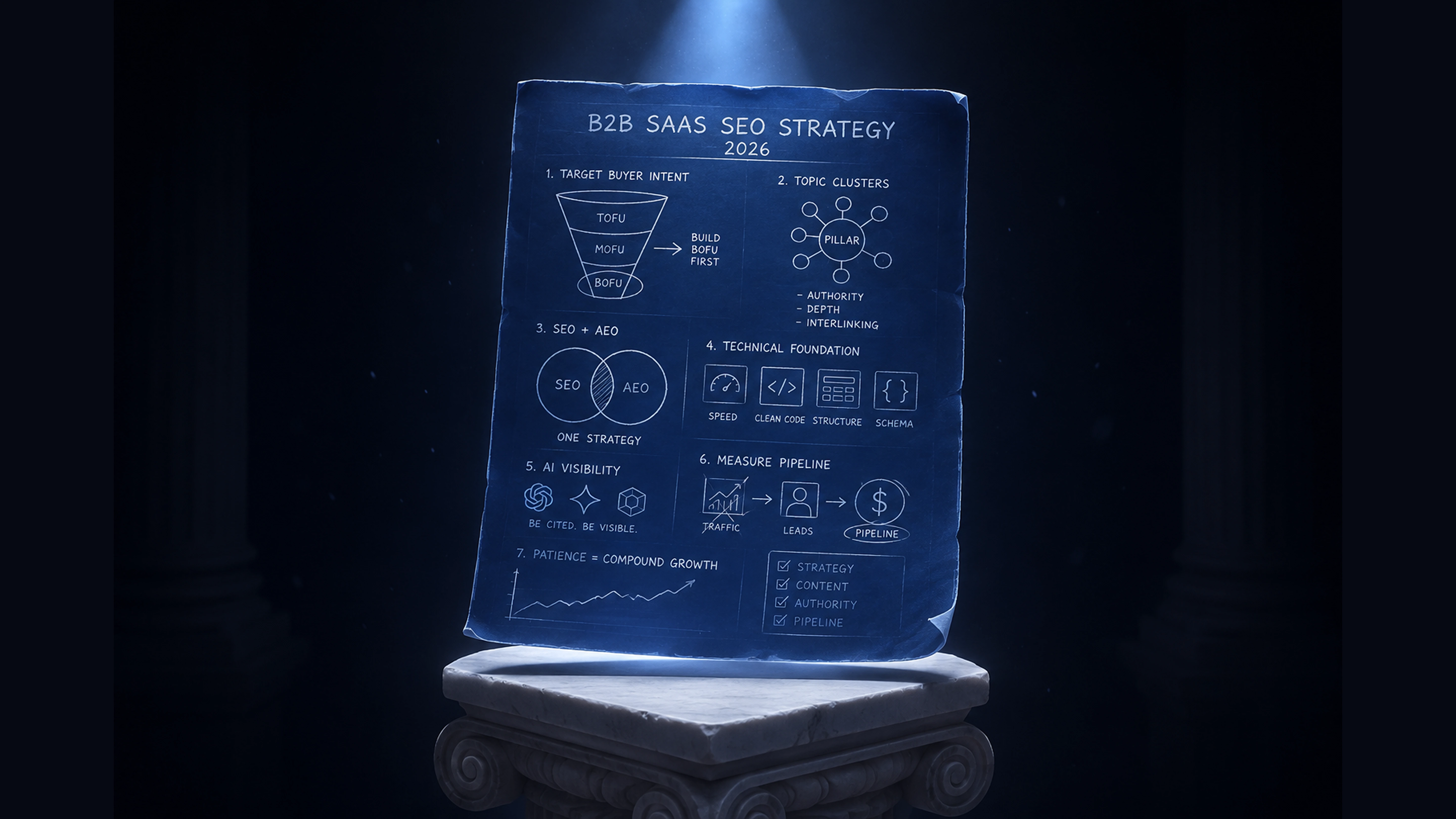

B2B SaaS SEO isn't B2C SEO with different keywords. Longer cycles, multiple stakeholders, and lower-volume, higher-value searches change the game. What works in 2026: chase pipeline over traffic, since 150 searches from real buyers beat 10,000 from researchers who'll never buy. Build BOFU before TOFU, since comparison and pricing pages convert best, and build proper topic clusters. Get the technical foundation right, treat SEO and AEO as one strategy since buyers now start with AI, and measure pipeline, not vanity metrics. Then be patient, because SEO compounds.
B2B SaaS SEO is different, and here’s why
Most SEO advice is written for a world where someone searches, clicks, and buys in a single session. That’s B2C, and it’s not how anyone buys B2B software. Following B2C advice for a SaaS product is why a lot of teams pour effort into search and see nothing reach their pipeline.
The buying process is fundamentally different. The sales cycle is long, often months, with multiple stakeholders researching, comparing, and signing off before anything happens. A buyer doesn’t land on a page and convert; they consult colleagues, compare vendors, and move through stages at their own pace. Your search strategy has to reach them at every stage, not just capture a single click.
The keywords work differently too. B2B SaaS terms rarely have the massive search volumes you see in consumer markets, but they attract far more qualified visitors. This is the single most important mental shift: commercial relevance beats raw volume. A query with 150 monthly searches from active evaluators is worth more than 10,000 from people who will never buy. This guide is a strategic framework for marketing leaders who need search to produce pipeline, not traffic reports.
Stop chasing traffic, start targeting pipeline
The most common way B2B SaaS SEO fails is treating it as a traffic game. Teams chase broad informational keywords that look impressive in a dashboard, generate visits, and never produce a single demo request. High traffic that doesn’t touch pipeline isn’t a win, it’s a cost center wearing the costume of a growth channel.
The fix is reframing your website as a pipeline engine, not a digital brochure. Every SEO decision should trace back to one question: does this attract someone who could actually buy, or just someone who could click? Broad terms like “what is project management” bring volume and almost no buyers. Specific, high-intent terms bring fewer visitors, far more of whom are evaluating a purchase. The point of B2B SaaS SEO is to capture demand at the moment of highest commercial intent, not to win a traffic contest.
This is also why your sales team is one of the most underused SEO tools you have. The questions prospects ask on calls, the objections they raise, the exact language they use, these are your highest-value keywords, and no tool can replicate them. Talk to the people who talk to your buyers, then back it up with Search Console data on what’s already bringing impressions.
Target buyer intent: BOFU before TOFU
If one tactical principle separates B2B SaaS SEO that works from the kind that doesn’t, it’s this: build your bottom-of-funnel content before your top-of-funnel content. Most teams do the opposite, and it’s why their SEO doesn’t convert.
Bottom-of-funnel (BOFU) content captures buyers who are actively evaluating, one step from a decision: comparison pages, alternative pages, pricing pages, and use-case pages. Someone searching “[competitor] vs [your product]” or “[category] pricing” is close to buying. This content converts dramatically better than informational posts, often around 8 to 15 percent versus well under 2 percent for top-of-funnel traffic. With limited resources, and everyone has limited resources, this is where to spend them first.
Comparison and alternative pages deserve special attention
They’re the highest-converting content type in B2B SaaS. A buyer comparing you to a competitor is one conversation from a trial. The counterintuitive key is intellectual honesty: a good comparison page acknowledges the competitor’s genuine strengths before making your case. That honesty builds trust and is far more persuasive than pretending you win on everything. Every B2B SaaS company should maintain honest comparison pages against the three to five competitors buyers mention most.
Top-of-funnel educational content still matters, but its role has changed and it comes after BOFU is solid. It builds topical authority and nurtures early prospects, but with AI tools now answering many informational queries directly, it drives fewer direct clicks than it used to. Build the high-intent foundation first, then layer educational content on top.
From our own experience: this is exactly why we treat honest comparison content (Webflow versus the main alternatives) as a priority. Those pages reach people actively choosing a platform, a very different and more valuable audience than people idly reading about web design.

Build topic clusters, not random posts
Once you know what to write, the next question is how to structure it. The answer that consistently works for B2B SaaS is topic clusters, not a scattered collection of one-off posts.
A topic cluster is a group of related pages organized around a central theme: one comprehensive pillar page, supported by multiple cluster pages on specific sub-topics, all deliberately linked together. This signals genuine authority to both search engines and AI tools, and creates a logical path through related content. Random, disconnected posts do neither, no matter how good each one is.
The discipline that matters most is focus. One cluster built properly, a strong pillar, eight to twelve well-linked cluster pages, deliberate internal linking, will outperform three clusters built halfway, in both rankings and conversion. It’s tempting to cover many topics shallowly, but depth wins. Most teams can sustain two or three active clusters at full quality, so dominate one topic completely before expanding. We practice this ourselves: rather than scattered articles, we build in clusters, a set of related comparison pages, a connected group of AI-search articles, so each piece reinforces the others.
The technical foundation
None of the strategy above works if search engines and AI tools can’t properly crawl, read, and trust your site. Technical SEO is the foundation everything else is built on, and it’s usually the first thing to get right.
It covers what determines whether your pages can be found and indexed: clean, crawlable structure, fast load times, mobile performance, proper metadata, and structured data. Not glamorous, but decisive. A brilliant comparison page that loads slowly or can’t be crawled cleanly won’t rank. Most technical issues can be found with a site audit and fixed relatively quickly, and once right, they tend to stay right.
This is one area where your platform does a lot of the work. A site built on clean, semantic code with controllable metadata, fast performance, and the ability to implement structured data removes most technical SEO friction before it starts. Fighting your CMS for basic technical control is a tax you pay on every page, which is part of why platform choice matters for SaaS SEO. A technically sound foundation, however you achieve it, means your content strategy isn’t undermined by problems underneath it.
SEO and AEO are one strategy now
A B2B SaaS SEO strategy for 2026 that ignores AI search is half a strategy. A large and growing share of B2B buyers now begin research with AI tools, with surveys putting it around half or more starting with AI chatbots rather than traditional search. A VP evaluating software doesn’t only Google “best marketing automation tool,” they also ask ChatGPT, Perplexity, or Claude to compare options for their situation. If you’re invisible in those answers, you’re losing pipeline you may not know exists. This is where Answer Engine Optimization (AEO) comes in.
The key insight is that AEO isn’t a separate initiative from SEO, it’s the same strategy extended. The content that ranks well and the content that gets cited by AI are built the same way: clear structure, direct answers, genuine authority, and accurate, well-organized information. The authority you build for traditional SEO, quality content, citations, and mentions across the web, is largely the same authority AI tools use to decide who to cite. You’re not doing two jobs, you’re doing one job that pays off on two surfaces. (We’ve written separately on AEO specifically; the takeaway here is that the two belong in one unified plan.)
Measure pipeline, not vanity metrics
How you measure B2B SaaS SEO determines whether it survives as a channel, because the wrong metrics make good work look worthless and bad work look fine. The most common failure is stopping at traffic and rankings.
Traffic and keyword rankings are leading indicators at best, and easily gamed. They tell you something is happening, not whether it’s producing value. The metrics that matter are further down: marketing-qualified leads, sales-qualified leads, demo requests, and ultimately pipeline and revenue from organic search. Making that connection means tying search to your CRM: track which organic content and search terms bring contacts that become real opportunities, capture the first landing page and source for every organic lead, and report against the same pipeline benchmarks every month. Google Search Console shows the search side (impressions, queries, positions), while your CRM shows what happens after the click. Connecting the two is what lets you prove, and improve, SEO’s contribution to revenue.

A realistic timeline, and where to start
Mismatched expectations kill good strategies before they compound, so be honest with stakeholders about timing. For less competitive cluster pages, rankings typically appear within three to four months of publishing. Traffic and lead volume follow around six to eight months. Genuine pipeline impact, deals closed from organic-sourced contacts, often takes twelve months or more, reflecting the length of B2B SaaS sales cycles. This isn’t slowness, it’s the nature of the channel. SEO is a compounding investment, not a thirty-day campaign, and treating it like the latter is why so many teams give up right before it starts working.
So where do you start? Begin with one cluster, built properly, focused on bottom-of-funnel intent. Pick the topic where buyer intent is highest, usually comparison, alternative, and pricing content, and build a strong pillar with well-linked supporting pages. Get your technical foundation sound, make sure content works for both search and AI answers, and wire measurement to pipeline from day one. One complete, well-executed cluster that drives real pipeline is worth more than a dozen scattered posts, and it’s the foundation you expand from.
The companies winning at B2B SaaS SEO in 2026 aren’t the ones publishing the most. They’re the ones targeting real buyer intent, building genuine authority in focused clusters, showing up in both search and AI answers, and measuring what actually matters. Get those right, and search becomes one of the most durable, compounding growth channels you have.

Frequently Asked Questions

Unlock the power
of
today