
From Guests to Sponsors: Notes from Flow Conf 2026
.png)
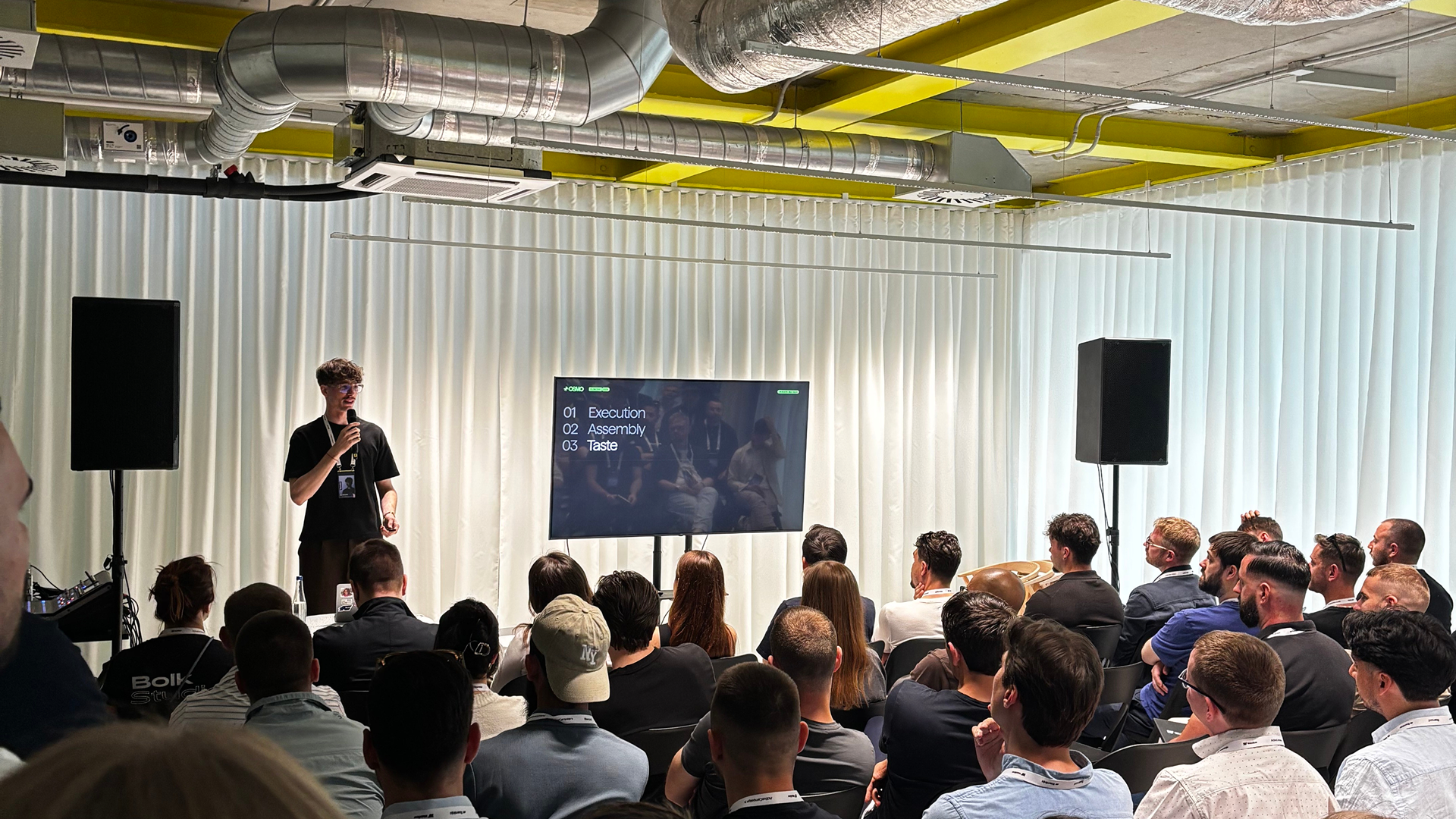

Last year, three of the Nues founders were guests at Flow Conf in Niš. This year, Nues came back to Belgrade as sponsors. A packed venue, two stages, and a few conversations that shifted how we think about positioning, pricing, and what makes an agency different from a freelancer.
A year later, with stickers
Danilo, Aco, and Darko were at Flow Conf 2025 in Niš, and as they said, they couldn’t even imagine Nues growing this much in just 12 months. Back then, we were three Webflow developers working in parallel, showing up to be in the room with people building around the same tool.
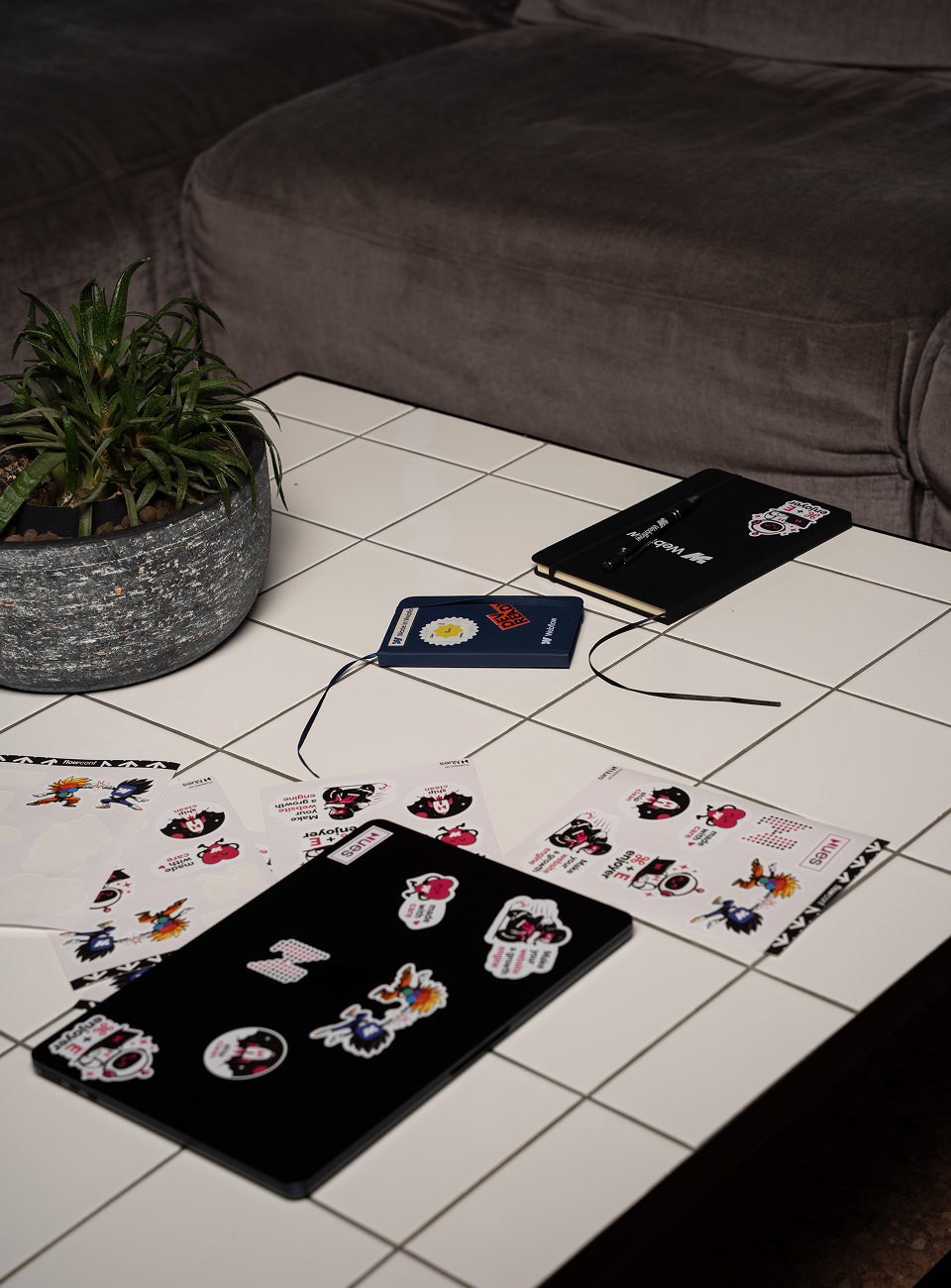
This year, we came back as sponsors. Stickers on the table, a logo on the sponsor wall, and a team that has grown. Flow Conf 2026 was my first event with Nues, so I was watching everything for the first time. The team had context I didn’t, and the contrast between “last year we were guests” and “this year we’re sponsoring” set the tone for the whole day.
Why we came back
For Nues, Flow Conf is the most natural conference to show up at. We work in Webflow every day. Most of the people in the room work in Webflow every day. Showing up as sponsors was less about marketing and more about being where the work lives.
That’s a sentiment we kept hearing from other sponsors and attendees too. Flow Conf isn’t where you go to make a pitch. It’s where you go to spend a day with people who understand what you do without needing it explained.
The talks
The agenda was packed and the topics ranged across what’s currently on every Webflow agency owner’s mind:
The topics that dominated the conference
The agenda was packed and the topics ranged across what’s currently on every Webflow agency owner’s mind:
- AI and the future of search (AEO, LLMs, what happens to traditional SEO)
- Branding and positioning in a market full of look-alike companies
- Webflow Enterprise and where the platform is going
- Speed of execution and modern web operations
- Scaling agency operations beyond founder-led sales
If there was a through-line, it was this: the Webflow ecosystem is no longer just about building websites. It’s about positioning, monetization, AI integration, and how agencies survive a market that’s getting more competitive every year.
The one talk that landed
Most of the recaps you’ll read from Flow Conf will mention the same three talks. Guy Yalif on AEO. Laura Zheng on branding. Peter Kang on scaling beyond the founder. All useful. All worth listening to.
But the talk that stuck with us was from Tadija Marković, Account Executive at Flow Ninja.
"$10K, $30K, $100K. Same Website. Different Conversation."
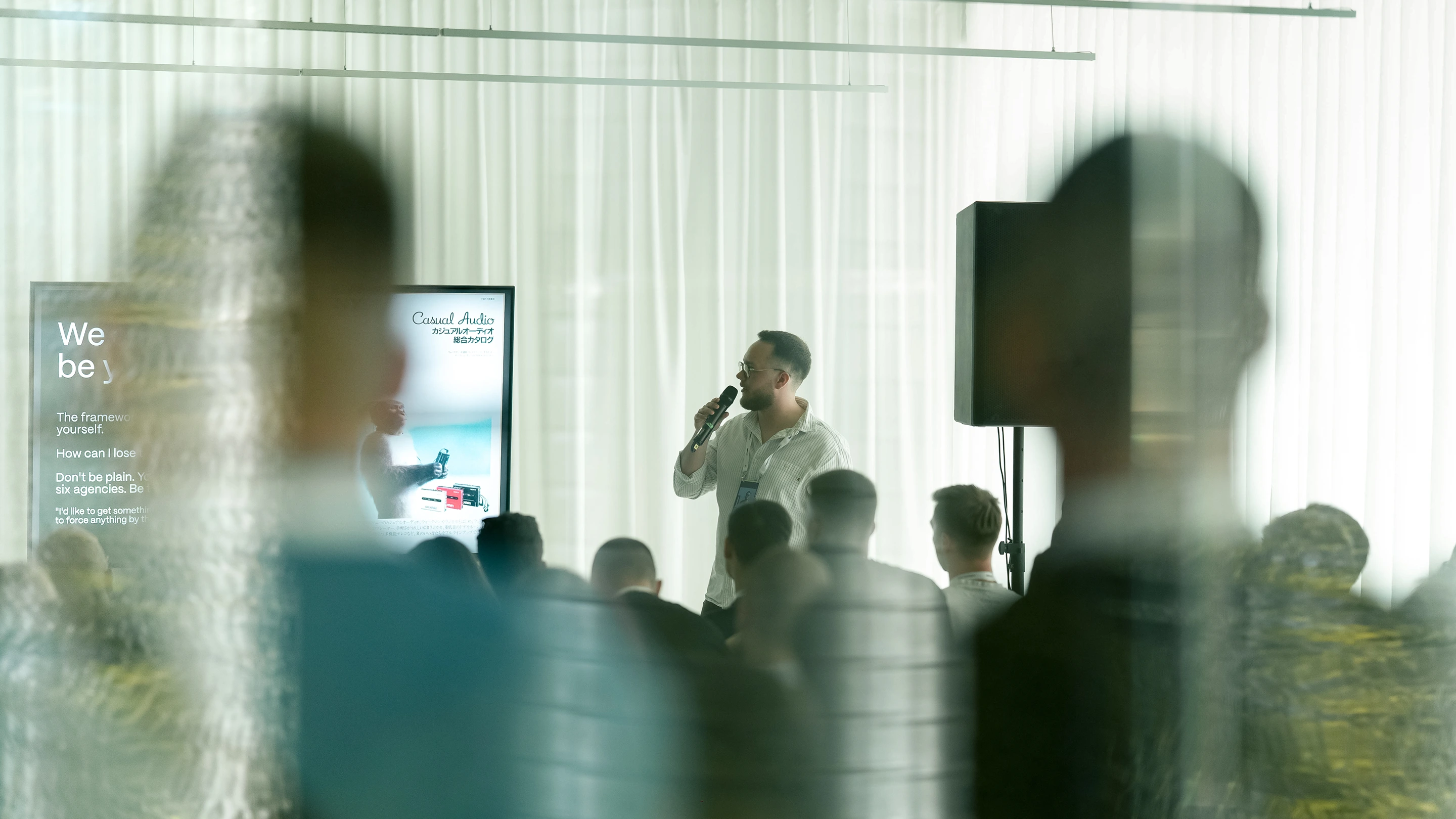
The Webflow room was packed when he spoke. People standing in the back. The kind of crowd that tells you the topic hit a nerve.
Tadija’s argument was simple but rarely said out loud: the gap between what a freelancer charges and what an agency charges for the same Webflow build is not really about the quality of the work. The work, in many cases, is similar. What changes is the process around it.
The contracts. The discovery process. The way scope is handled. The handoff. The post-launch relationship. The way questions are answered. The way problems get escalated. All the things that don’t show up in the final Webflow site but shape every interaction the client has with you.
That’s the difference between $10K and $100K.
His delivery made the point land harder. The talk was conversational, full of small jokes, but the underlying message was sharp. He wasn’t pitching theory. He was describing the actual mechanics of why agency pricing works.
For Nues, this hit close to home. Tadija’s talk was a reminder that what we charge depends less on what we can build and more on the system we build around it.
The conversations that mattered more than the talks
The after-party was where the most useful conversations happened.
We caught Tadija after the talk and got into a longer conversation about the mechanics he had only touched on from stage. Specifically, how a small agency starts thinking like a bigger one before it actually is.
We also talked to Miša AKA the Professor from Flow Ninja’s growth team. His advice was direct: in a market full of small Webflow agencies, the first thing we need to figure out is what makes us different from the rest. Not in tone or visual identity, but in something concrete that a buyer can point to.
He had a few suggestions. One of them was looking at the loop between marketing and development as a possible differentiator. Most small Webflow agencies are either design-first or dev-first. The teams that combine both, with marketers and developers in the same room from day one, are still relatively rare.
We left both conversations with more clarity than we walked in with. That’s the value of a conference like this. You can read about positioning. You can watch every talk on YouTube later. But you can’t replicate the conversation that happens at the right time, with the right person, with no agenda except thinking out loud.
Looking forward
Flow Conf 2026 left us with a few things to work on. Sharper positioning. A clearer story about what makes Nues different. A reminder that pricing is a function of process, not just output.
It was also a reminder that the Webflow community is small enough to remember faces and big enough to keep growing. The room felt bigger this year. More accents. More people coming in from across the World. The community is leveling up.
See you in 2027.

Unlock the power
of
today