
The signs your current Webflow site is holding your business back



The clearest sign your site is holding the business back is not slow loading times or outdated design. It’s how often your marketing team needs to ask a developer for something simple. If updating a hero, publishing a blog post, or shipping a landing page requires a ticket and a wait, the site is no longer working for the team. Here are six signs to watch for.
Most “is your website holding you back” articles get the symptom wrong. They focus on performance metrics, design trends, and conversion rates. Those things matter, but they’re rarely what kills a marketing team’s momentum. What kills momentum is the daily friction between wanting to ship something and being able to.
If you’re a marketing leader trying to figure out whether your current site is still serving the business, the test isn’t whether it looks dated. It’s whether your team can move at the speed of the business. Here are six signs your site has crossed the line from asset to liability.
1. Your marketing team can’t update copy without a developer
This is the most common one, and the most expensive. When marketing wants to tweak a hero, change a value proposition, or test new wording on a CTA, it shouldn’t require a Jira ticket. If every text change goes through dev, two things happen. Marketing slows down to dev velocity, which is always slower than marketing velocity. And dev resents being pulled off product work for one-line copy edits.
The whole point of a modern marketing site is that the people writing the copy can ship the copy. If that’s not your reality, the site is the bottleneck.

2. New landing pages take weeks, not days
Marketing teams need to spin up landing pages constantly. Campaign pages, event pages, lead magnets, demo pages, partner-specific pages. If launching a new landing page takes three weeks because someone has to “build it in code,” that’s a sign the site was never designed for marketing speed.
A healthy site treats landing pages as marketing assets, not engineering projects. The team should be able to clone a template, swap content, and ship in a day. If that’s not possible, every new campaign is delayed by the platform, not the strategy.

3. Your CMS can’t keep up with your content strategy
Maybe you started with a basic blog. Now marketing wants case studies, customer stories, podcast episodes, webinars, downloadable guides, and an integration directory. Every new content type triggers a development cycle. New collection, new template, new layout, all custom-built each time.
A site that can’t grow with your content strategy is a site you’ve outgrown. The CMS should make it easy to add new content types without writing code. If it doesn’t, marketing has to choose between shipping what’s possible and shipping what’s strategic.

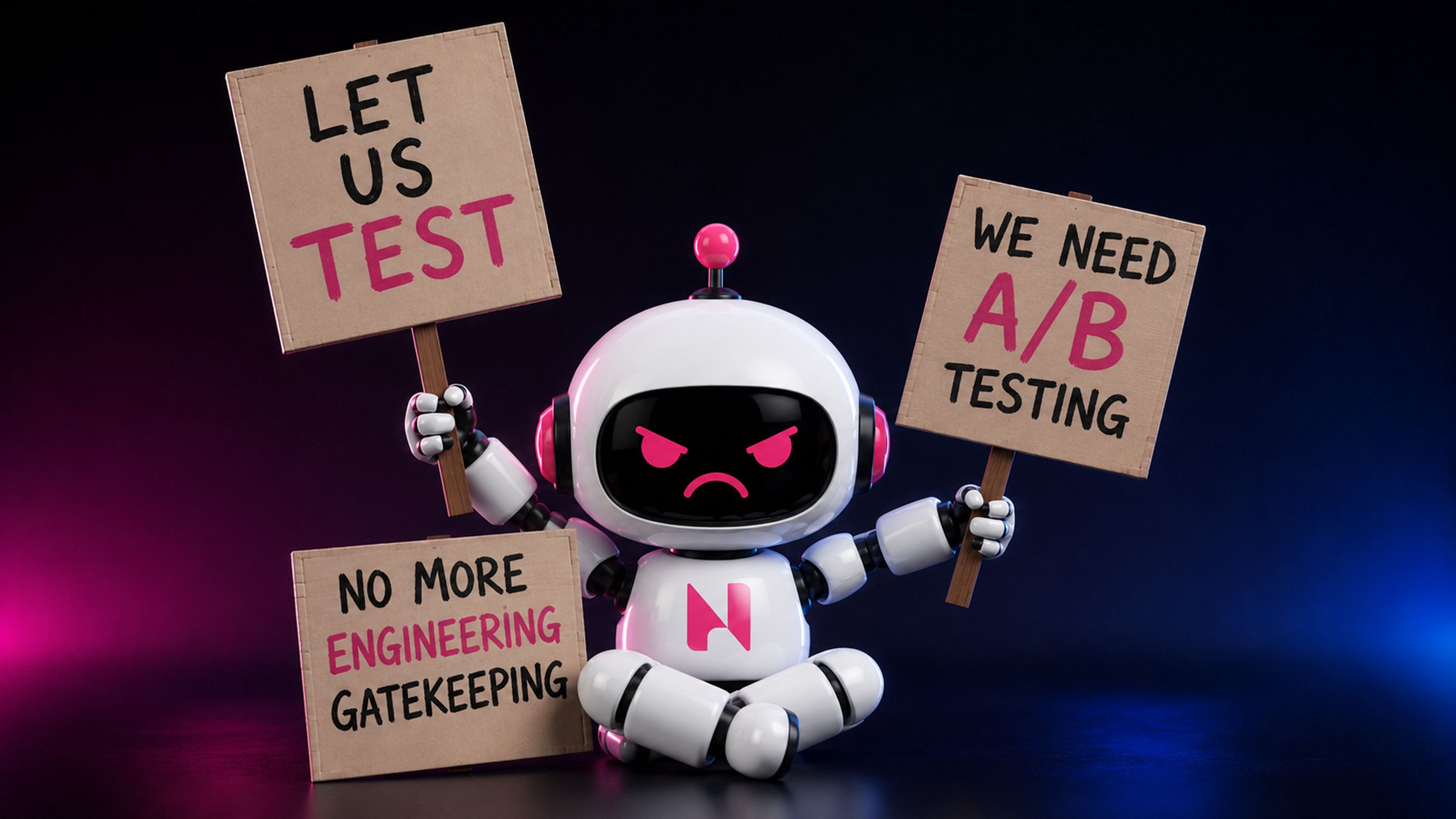
4. A/B testing feels impossible
When marketing wants to test two versions of a page (or a hero, or a CTA), the answer should be “let’s set it up.” If the answer is “let me talk to engineering,” the site is in the way. Testing should be something marketing owns, with the tools and access to set up experiments, run them, and read the results without scheduling sync calls.
Sites that don’t support testing are sites that stop improving. The team that can’t test, can’t learn. The team that can’t learn, can’t grow the business.
5. Tracking and analytics are a black box
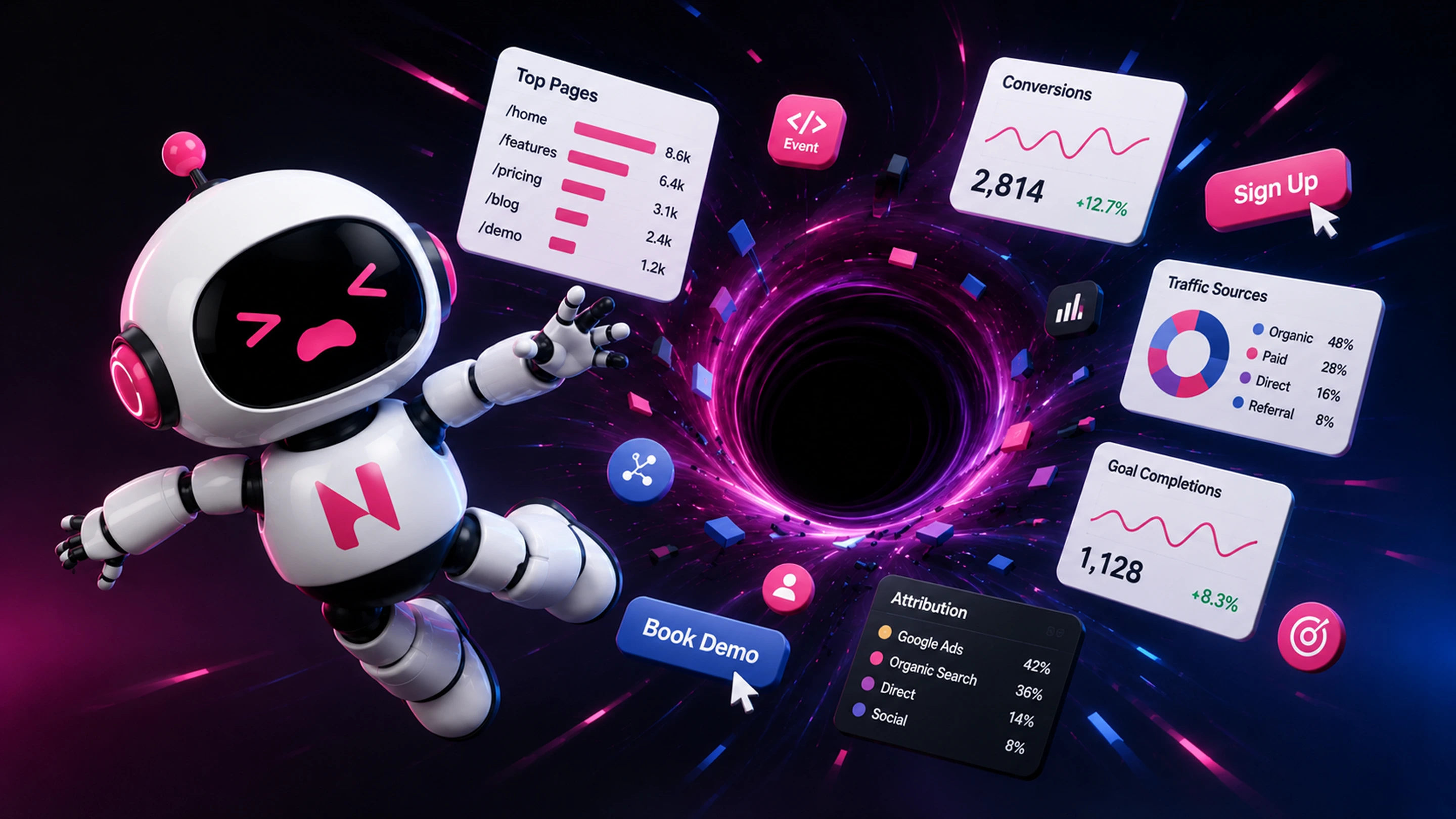
If marketing can’t tell which pages drive pipeline, which CTAs convert, which traffic sources actually matter, the site has become a marketing black hole. Money goes in, traffic comes out, but the data needed to make better decisions either doesn’t exist or lives somewhere only engineering can access.
A modern marketing site exposes the data clearly. Page-level analytics. Form-level conversion data. Source attribution. Event tracking. If your team has to file a request to see how a campaign performed, the platform is working against you.
6. Every new tool requires custom integration
Marketing teams add new tools constantly. Lead enrichment, ABM platforms, intent data, customer data platforms, sales engagement, attribution tools. Each one needs to connect to the site. If every integration is a custom development project, the velocity of the team is capped at the velocity of engineering.
Healthy marketing sites are easy to integrate with. Native support for common tools, clean form data, accessible APIs. If your team is regularly told “we’d need to build that,” the site is choosing the tools, not the team.

What this actually means
None of these signs mean you have a bad site. They mean you have a site that was built for a different stage of the business. Marketing was smaller. Content needs were narrower. Tools were fewer. The site fit then.
The question worth asking is whether the platform you built on is the one that grows with you, or the one that has to be replaced when you outgrow it. Some platforms force a rebuild every couple of years because they were never designed for marketing teams to own. Others give marketing the keys and let the team move at its own pace.
If three or more of the signs above are familiar, the conversation worth having internally is not “do we need a redesign.” It’s “is the platform itself the constraint.” Those are different problems with different solutions.


Unlock the power
of
today